We will be talking about “useful weeds” on my favorite gardening show, The Central Texas Gardener, KLRU, starting on Feb 6th. I’ll be joining Trisha Shirey in her Backyard Basics segment and would love to have you join me and learn about some important plants sprouting up in your garden and yard this spring.
I have been thinking a lot about our spring “weeds”. They are not weeds. They are plants that we don’t know the use of yet. Or another explanation, they are plants that we do not want in our gardens. Needless to say these little, tenacious plants love to overtake an area for a short time, especially in the spring. They are to be noticed, understood and then harvested for medicinal preparations. At this very moment my yard is a carpet of Chickweed, Stellaria media, and my garden is filling up with Cleavers, Galium aperine. I really love both of these plants, as they are useful medicinals, as well as nutritional additions to your diet with some practical uses as well. Read on and learn about my green friends, Chickweed and Cleavers.
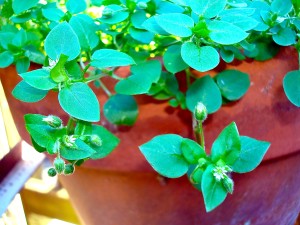
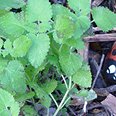
I’ve never planted Chickweed, but it comes up in the planter box and in various pots on my deck. I also see it growing abundantly in the backyard, thick and lush. Like Cleavers, Chickweed is an early spring tonic and can be eaten fresh in salads, combined with Dandelion greens, steamed or sautéed as any other green, or just munched on by itself. It is quite nutritious, containing protein and many minerals, some including Zinc, Magnesium, Manganese, Silicon and Iron.
Chickweed is used medicinally as a Urinary demulcent and a diuretic. It can be used externally for skin irritations, itch and rashes. Hence it is an important ingredient in my Scratch No More Salve, This salve is very effective, safe and quite popular.
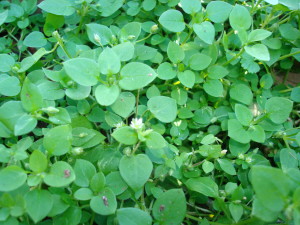
An effective cooling herb, Chickweed is used as an anti-inflammatory to reduce the swellings in fingers, hands and feet from sprains, arthritis and gout. Traditional folklore claims to use Chickweed to treat obesity. This may be due to its action as a diuretic, but as an herbalist and a counselor, what I recommend to my clients who want to loose weight is to establish and maintain an excellent nutritional program, frequent and enjoyable exercise and a positive attitude.
By the way, it truly is not a weed that is coming up all over your garden and yard.
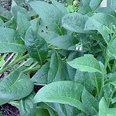
It is Cleavers, Galium aparine, commonly known as Bedstraw, Goosegrass, Sticky Willie or Catchweed. It is believed that the bed of baby Jesus was stuffed with Bedstraw. This plant, which acts like a botanical Velcro, is an important and valuable herbal medicine. As a matter of fact, Cleavers stimulated the invention of Velcro. 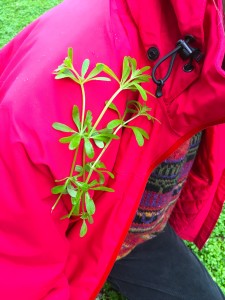
It is sticky however, and it grows long and lanky with whorled leaves on long stems. It is a European native and is often found on roadsides, fields and in moist places. It returns every year in early spring to remind us to take our spring tonics and get our blood flowing smoothly and easily. Cleavers is a blood purifier and helps to cleanse the circulatory system after a sluggish winter season.
Cleavers can be eaten fresh in a spring salad and acts as a cooling herb, so it is helpful for fevers. Cleavers is known for relieving swollen lymph glands and supporting the functions of the lymphatic system. I use the aerial parts of the plant as a urinary astringent for treating urinary and reproductive organ inflammations. This fresh herb along with other urinary herbs including Chickweed, Uva ursi, Nettles and Cornsilk make my Kidney Tonic Tea a good choice for uri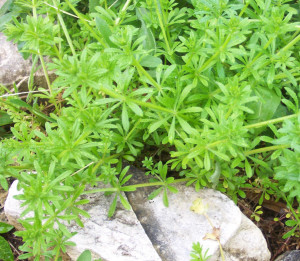 nary issues. Cleavers can also be useful in treating arthritis and as a poultice for burns and rashes.
Cleavers makes a pleasant tasting tea and soon it will time to harvest it and tincture the fresh plant. Herbal tinctures made from fresh plant material are truly the most powerful medicines. Please email me if you would like to special order this potent tincture. Cleavers is also used cosmetically to clear the complexion, control dandruff and as a natural deodorant.
So the next time you want to yank these plants out of your garden, thinking of that four-letter word, remember all the valuable attributes of these common springtime green friends and give gratitude for the many bounties of our Mother Earth.






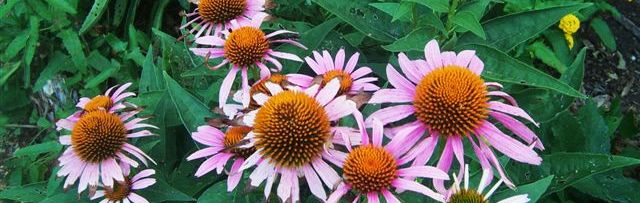
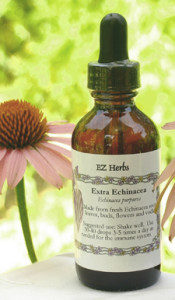
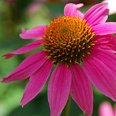
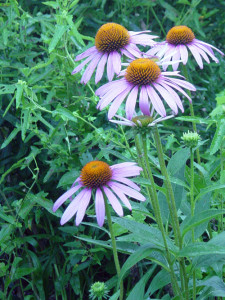 Echinacea purpurea is listed as an “At-Risk” plant by the United Plant Savers organization. This valuable plant has been over-harvested from the wild and it is not as readily available and plentiful as it once was. This alone is a good reason to get viable seeds from a friend who has grown the plant, and cultivate it yourself. It is important to put these “At-Risk” plants into our gardens for our own harvest, or to buy only organically cultivated herbs when purchasing Echinacea as a tincture or tea.
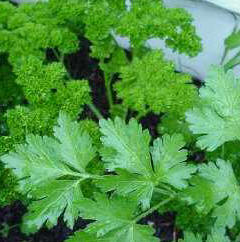 learn those.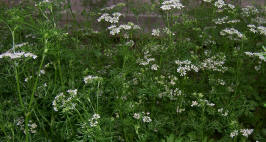
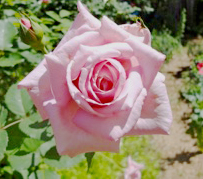 Are Roses herbs? You may not think so, but Roses are edible, medicinal, fragrant bouquets, used for cosmetics and easy to grow. The Rose, Rosa spp. is not only a gorgeous and fragrant flower, but it is also used to make cosmetics, cookies, ice cream and lemonade, and as a tincture, it is useful to alleviate depression and heighten one’s mood.
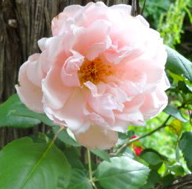 I use fresh rose petals in my Rosewater in my Perfect Cream and Queen of Hungary’s Water, and I frequently use dry rose blossoms in herbal steams and my Miracle Grains (a facial cleanser).
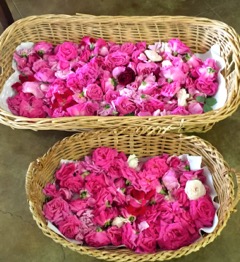 Roses speak the language of love and are frequently given to those we cherish. Roses signify romance and seduction. Not only a symbol of love, friendship and passion, but growing roses and using the flowers, leaves and hips can be rewarding for use in cosmetics and medicine. In old-fashioned “tussie mussies”, red roses signify everlasting love, pink roses signify sweet affection and white roses signify the purity of romantic love. Cleopatra had her servants gather rose petals to scatter in her boudoir to entice the affections of her chosen one. Legends have it the couple would stand knee deep within the deep fragrance of the blossoms, swooning from the erotic aroma.