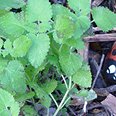
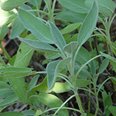
It’s November and the month of Thanksgiving. With much gratitude for a very useful plant, I thought I’d write about an herb that is often used in traditional turkey stuffing or dressing as some say. That herb is Garden Sage, Salvia officinalis. 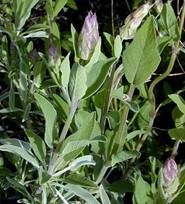
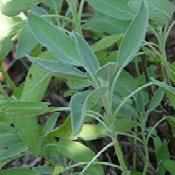
Garden Sage likes to grow in the full sun and in dry soil. It is a native to the northern shores of the Mediterranean and likes our limestone soils or lack of soil. Sage is a good garden plant for Central Texas. The light gray/green leaves are a beautiful contrast to the darker green of many of our garden plants, and in the spring, if you’re lucky, a profusion of luscious pink flowers will bloom and last quite a long time. Even though Sage is a perennial herb, in Texas it seems to last only about three years. Then it may become leggy and thin out, so it needs replacing.
Sage is not only tasty but it has several strong medicinal properties. The leaves of Sage act as a powerful astringent, slowing down the secretions of fluids. A Sage tea can be used for colds and sore throats, for excessive sweating (including those night sweats), vaginal discharge, post-nasal drip and diarrhea. Sage will stop the flow of mother’s milk, so use it only if you are ready to wean a nursing baby. The Native Americans rubbed the fresh leaves of Sage on their teeth as a cleanser as well as using it to treat infected gums and mouth ulcers. When I get an annoying canker sore inside my mouth, I simply go out in to the garden, pick a Sage leaf or two, chew it a bit and then place it on the sore. I leave this poultice on the sore for an hour or so and soon the irritation is eased and the sore begins to disappear.
 Sage tea, mixed with honey and lemon is excellent for sore throats and colds. You can also gargle with the tea. Add a little apple cider vinegar as a bonus to aid in the healing process. The cooler season is soon upon us so stock up on Respiratory Herbs to ease the stress and uncomfortable symptoms of winter colds and flus. Check out my Cold Season Sale on the home page of my website. If you purchase just 2 of my Cold Season products including: Extra Echinacea Tincture, Mullein/Horehound Blend, Nettles Tincture (Fresh tincture for allergies), Respiratory Tea, Osha Root Tincture and Horehound Tincture, you will receive a free tea of your choice.
Finally Sage, most often White Sage, Salvia apiana, is used by Native Americans and by many spiritual groups as a Smudge Stick to clear the environment of negative energy. These days I am using our local Cedar, Juniperus ashei in making my smudge sticks as it is local and quite purifying.
It is important to limit the use of Sage to only a week or two. Sage contains a volatile oil, Thujone, which may act as a neuro-toxin. Therefore, overdoses, or long term use of Sage, may be detrimental to the functioning of the nervous system.
When taking responsibility for using herbs for your health, it is always wise to be aware of any contra-indications related to the use of the herb. For the most part, herbs are very safe and have little side effects.
I hope you will enjoy using Sage in turkey stuffing to flavor the bird as well as to aid in the digestion of fatty foods. Enjoy the benefits of drinking Sage tea, as needed for sore throats and remember to incorporate Sage when a strong astringent action is needed. Have a wonderful Thanksgiving holiday. I am so grateful to all of you!!
With Green Blessings,
Ellen
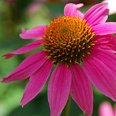
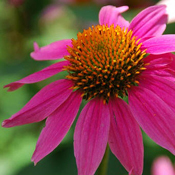 b that is used to boost your immune system. You can use Echinacea as a preventative; i.e. when traveling to avoid getting sick, and to assist your own healthy immune system in fighting a cold, flu or infection. The root, flower, leaves and seed of the Echinacea plant can be used as a tea or tincture and the medicine tingles in your mouth while making its magic. Try some of my
 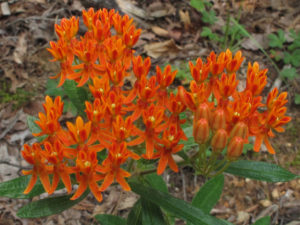 (as it is a favorite home to the Monarch butterfly), or Pleurisy Root, Asclepius tuberosa is a spectacular flower, and sadly, “At-Risk” in the wild. We can easily grow Butterfly Weed from seed, sown in the fall, or it can be propagated from root cuttings. This showy Milkweed is used as a diaphoretic (promotes sweating), antispasmodic, expectorant and a tonic. As one of its common names indicates, it was often used for pleurisy and lung and bronchial congestion.
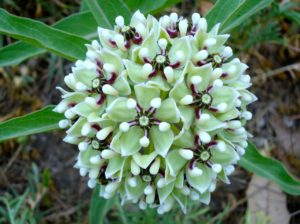 Asclepius asperula, to facilitate childbirth. According to Herbalist, Michael Moore, the aerial part of the plant is good for the Respiratory System and also helpful for the heart. This plant is elusive and oh so beautiful!!. Look at it closely.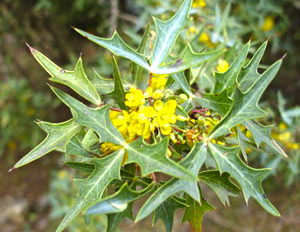
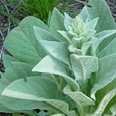
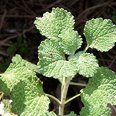
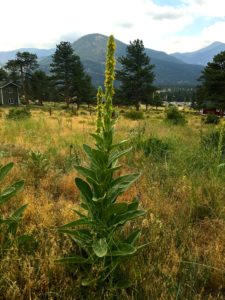 Mullein, Verbascum thapsus, has been used as a complementary medicine for centuries, and in many countries throughout the world. The value of Mullein as a proven medicinal herb is backed by scientific evidence and traditional folklore. Many cultures proclaim Mullein as a highly medicinal herb. I am presently in the high elevation of Colorado and have Mullein all around. It’s beneficial properties for the lungs is important here as I am harvesting and drinking Mullein leaf tea to open the lungs and ease the stress of the thin air. Hiking in the mountains is also excellent and invigorating for the lungs. Some valuable constituents contained in Mullein are Coumarin and Hesperidin as they exhibit many healing abilities. Research indicates some of the uses as analgesic, antihistaminic, anti-inflammatory, anticancer, antioxidant and antiviral. An infusion (medicinal herbal tea), is taken internally in the treatment of a wide range of chest complaints, including asthma and bronchitis. The leaves, root, and flowers are anodyne, anti-inflammatory, antiseptic, antispasmodic, astringent, demulcent, diuretic, emollient, expectorant, nervine, and vulnerary.
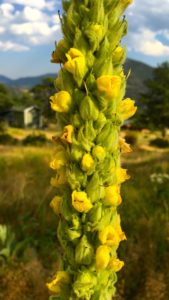 flowers, which are formed in the plant’s second year, are soaked in olive oil and used as earache drops (the flowers are often combined with Garlic for optimum effectiveness). The oil is also useful as a local application in the treatment of piles and other mucous membrane inflammations. This infusion is a strong antibacterial. The oil used to treat gum and mouth ulcers is very effective. A decoction of the roots is used to alleviate toothache and is helpful in relieving cramps and diarrhea. The whole plant possesses slightly sedative and narcotic properties. The seeds are mostly used as a narcotic and also contain saponins. The dried leaves are sometimes smoked to relieve the irritation of the respiratory mucus membranes, and for hacking coughs. The inhaled smoke is mild, but quite effective as an Expectorant. The Native Americans practiced this technique of smoking Mullein and it’s use has been show to be relieving. Externally, a medicinal poultice of the leaves is applied to sunburn, ulcers and hemorrhoids.
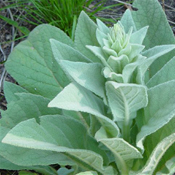 Finally, the leaves of Grandfather Mullein may be used as “Cowboy toilet paper” when you may be hiking in a remote area. Perhaps that’s another reason why it is so abundant here in Rocky Mountain National Park.
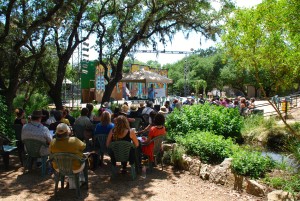 The day was perfect. The weather co-operated, even though it had rained the entire week before, but on Saturday, the day of the event, it was sunny, clear, and barely reached 80 degrees. The venue is shaded with large trees, there was a breeze and everyone was quite comfortable.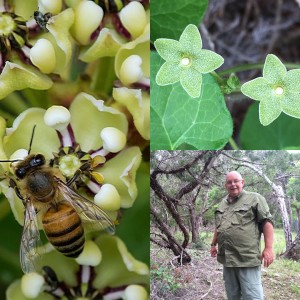

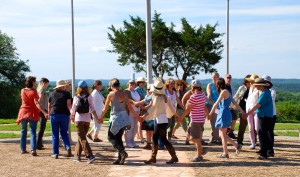 We ended the day atop the hill where a 360 degree view of the Texas hill country waited to astound you. We had fun doing a wrap-up where I got to hug everyone, and a Vortex circle, where we each were able to look into one another’s eyes, smile and be together one last time for the day.