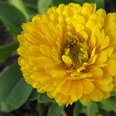
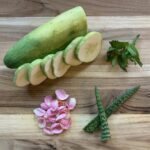
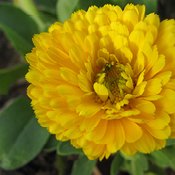
 A vibrant orange flower that is planted in the fall, easily grows throughout the winter, and greets you in the early spring, is none other than Calendula officinales, also known as pot marigold. Not a true marigold, Calendula should not be mistaken as a marigold for it maintains unique and very strong medicinal properties.
Here in Central Texas, Calendula seeds should be planted in the fall in full sun. They will grow during a mild winter and reward you with early bright orange, sometimes yellow flowers that bloom steadily and can be harvested as needed. During the heat of our summers, you might loose your Calendula crop, but a few of my plants have surprisingly survived over one or two summers. The flowers of Calendula are edible and quite beautiful in a fresh green 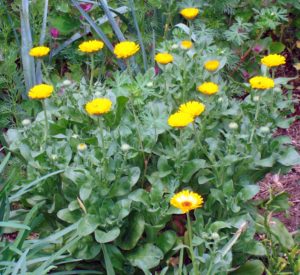 salad. The flowers have anti-depressant properties (who could stay depressed just looking at these bright, sunny flowers), as well as excellent anti-inflammatory properties most useful for skin disorders. I use the flowers most often to make a soothing Calendula Salve. I often make a simple Calendula Salve, but also combine this incredible herb with other herbs that are useful for skin problems. I include Calendula flowers in all my salves including All-Purpose Salve, Fungal Salve, Scratch No More Salve, Black Salve and Wound Salve. Applied externally Calendula salve will effectively treat burns, stop bleeding, soothe the pain of injuries and irritation, and promote the healing of wounds, insect bites and bruises. Calendula is also excellent for chapped lips, frostbite, hemorrhoids and a wide variety of skin disorders. Calendula can also be taken as a tea to reduce fevers, ease menstrual cramps and help promote healing of eruptive skin disorders like measles.
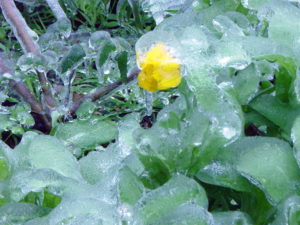 A miraculous little flower, Calendula has a permanent home in my garden. Last year on Valentine’s Day I had a Calendula flower blooming through the snow that fell that day. Calendula enjoys the cold weather and that is why it needs to be planted in the fall so we can enjoy its winter or early spring arrival.
So if you didn’t have the opportunity to plant seeds this fall, go out and buy some 4 inch plants and transplant them in to your garden. Remember to collect the seeds so you’ll have a fresh crop every year.
Fall is the best time to plant many herbs, flowers and vegetables here in Central Texas. So get busy in the garden, prepare your soil and enjoy the bounty that Mother Nature so graciously provides you.
With Warm Green Blessings,
Ellen
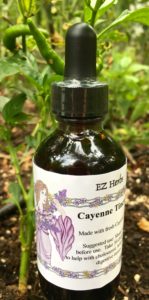 recently made a new Cayenne Tincture and it is available for sale
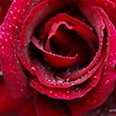
 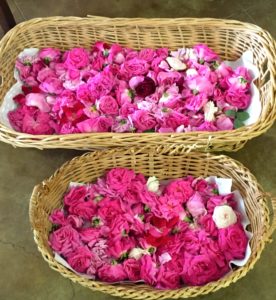 Rose petals are velvety soft and high in mucilage. Roses are also “cooling” for fevers, and are used as an astringent for infantile or childhood diarrhea. Not only a symbol of love, friendship and passion, but growing roses and using the rose flowers, leaves and hips can be rewarding for use in cosmetics and medicine. Rose Tincture is an excellent remedy for a broken heart and specific for treating grief. It truly OPENS the HEART and allows more love inside. Cleopatra had her servants gather rose petals to scatter in her boudoir to entice the affections of her chosen one. Legends have it the couple would stand knee deep within the deep fragrance of the blossoms, swooning from the erotic aroma. Try some incredible
 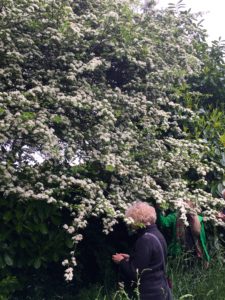 that grows in many areas of the world. Hawthorn is a cardiac tonic and can be used both preventively and for some acute situations. I take a Hawthorn blend of the flowers, leaves and berries and use it as a preventative since both of my parents have had heart disease. I was delighted to see dozens and dozens of Hawthorne trees in bloom on my recent Plant Lover’s Journey to Ireland. The Irish said they haven’t seen a year like this in a long time. The Irish are not the only lucky ones!! You can drink a tea from the dried berries or take the blend as a tincture. Hawthorn is known to normalize blood pressure, it is strengthening to the heart muscles weakened by age and helpful for nervous heart problems and irregular heart beat. Hawthorn has been used for many, many years as a safe, heart tonic and does not have any known contra-indications for use with allopathic medicines.
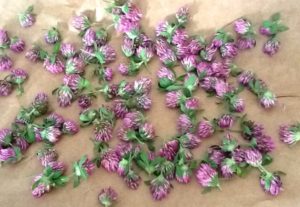 Red Clover, Trifolium pratense, is another effective herb that benefits the heart. It can particularly help with the strengthening of menopausal heart muscle. One important contra-indication to using Red Clover is that it has a blood thinning constituient, Coumarin, so if you are on a blood thinning medication like Coumadin, you probably should avoid using it.
 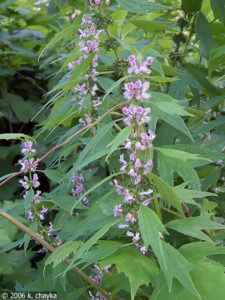 Used as a sedative and heart tonic, Motherwort can ease depression and calm the nervous system.
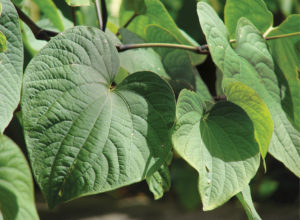 I just received a package of freshly harvested Kava kava Root, Piper methysticum, from my source in Hawaii so I am inspired to write about it. He digs it up from the ground and quickly sends it along with some dirt still on it so it is FRESH! I am so lucky to be able to process and sell this fresh Kava Root as a tincture. I call Kava my ‘Big Guns” as it is probably the strongest herbal medicine I make.
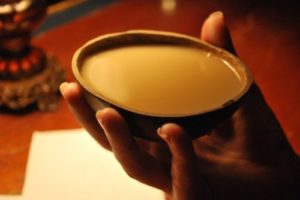 the Polynesian Islands where it grows naturally. It is a ceremonial herb that is usually made in to a tea and shared with others in a community. Kava kava is quite relaxing as it works on the nervous system to alleviate anxiety, ease tension, reduce the frequency of insomnia, and helps to create a euphoric mood. Kava kava is also a strong muscle relaxer. If you have neck, shoulder or back tension, using Kava may relax your muscles and help initiate the healing process.
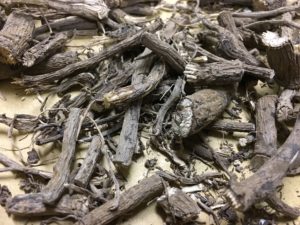 Years ago Kava was taken off the market for a period of time, as some considered it unsafe. Kava is strong medicine and should be used wisely but it is safe when used occasionally for specific situations. The problem was that some students in California overused it to relax and some liver issues developed. This has never been proven that the liver problems were from the Kava. Needless to say it is always wise to use any herb, or drug, or food, moderately and only when needed.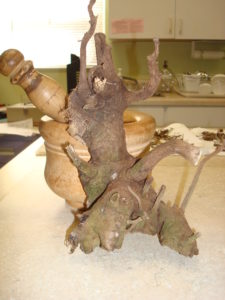
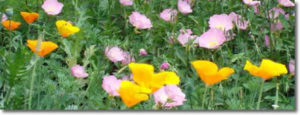
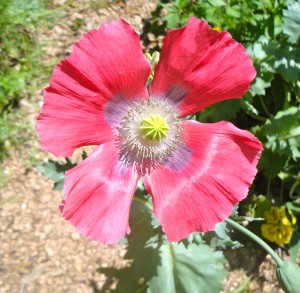 and California poppies, Eschscholzia californica which I will discuss today.
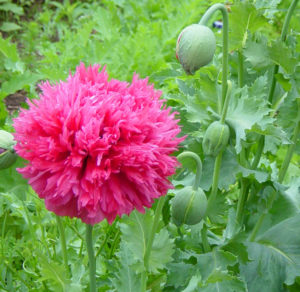 The Dorothy poppy is a full double or triple petal, a gorgeous rosy pink and the most incredible, sweet, luscious flower. After some time the pom pom rosy poppy will revert back to a flat flower. How interesting!!! The Oriental poppies including the red, white,
 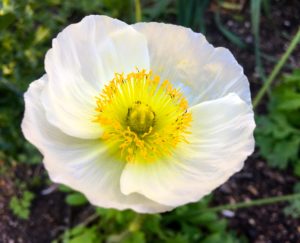 lavender and pink all contain a number of alkaloids with sedative and hypnotic properties. The latex, which exudes from the stem, is a narcotic and should be avoided.
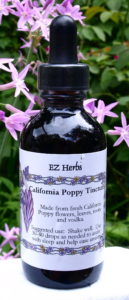
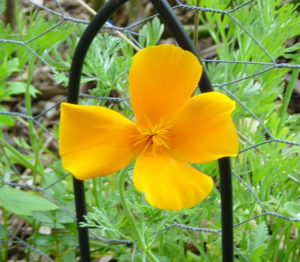 The lovely little orange California poppy, Eschscholzia californica, is another perennial poppy that grows well here and the entire plant can be used as a sedative. This poppy does contain flavone glycocides but is not considered narcotic. The California poppy can be made into a tincture and used to relieve pain, as a sedative for insomnia, to help with anxiety, to allay diarrhea and to inhibit the cough reflex.