Questions or problems regarding this web site should be directed to the
webmaster.
|
Surviving
the Ice Storm of 2007
Click to enlarge each picture.
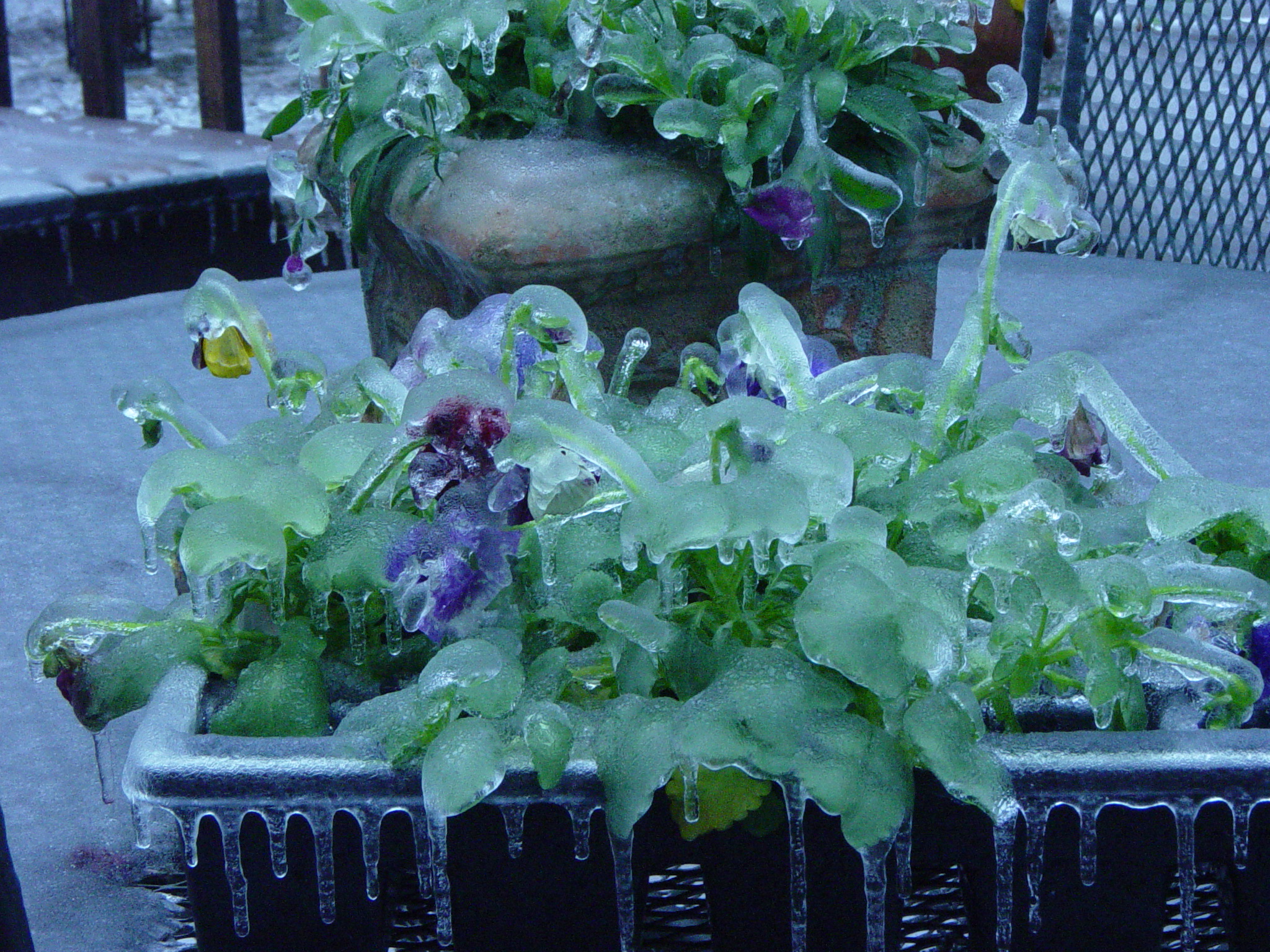
I sincerely hope that all of you enjoyed our few days at
home and I also hope that your garden and plants tolerated the ice as well as
mine did. I thought that I would write about this as many of you have requested
any helpful information that would help you survive the next Siberian ice blast
soon to appear.
First of all, it is important to protect your garden prior
to any ice storms or extended freezes. What I can best do is tell you what
I do every winter. Several weeks before the expected first freeze
(usually around Nov. 15th or so), I go back and forth from my mulch
pile and apply this mulch to most of my tender plants. These include Lemon
Verbena, Esperanza, Brugmansias, Hibiscus, Lemon Grass and many more too
numerous to mention. Just KNOW your garden and where those tender
perennials are. I occasionally miss one or two and they often survive
nonetheless. I use my own cedar trees which we have mulched and which have
stood in a pile on the property for awhile. The cedar has aged
sufficiently so there won’t be a problem with cedar leeching nitrogen from the
soil as some suspect.
In addition to mulching, I, we, and anyone else I can
wrangle into the job, takes heavy potted plants (and I have dozens of these,
last count was 45 or so) into my small, but very efficient greenhouse where they
happily stay until approximately March 15th. I water them from
my rainwater tank (which they love) and many plants blossom during the winter.
I have these gorgeous hot pink Brugmansia flowers, an Aloe Vera bloom and even
my Holy Basil is blooming. Actually I’m gong to show these plants on
Central Texas Gardener, so tune in on Feb 24th to see them (and me
too).
Always water your garden thoroughly before a freeze or a
long cold spell. A well watered garden is the best preventative to any ice
damage. Luckily, prior to the ICE BLAST, we had a lot of rain and that
really helped my garden. As a matter of fact, my garden looked incredibly
vibrant and healthy after the ice melted.
So surviving an ice blast or freezing weather takes just a
couple things. Take it easy, nature has its way of surviving whatever it
needs to. Secondly MULCH, MULCH, MULCH, the best prevention. And
finally bring your potted plants inside, and when it’s really cold, use a heater
in your garage, shielded patio or green house. Also cover any of your favorite
plants with old sheets, towels or row cloth.
Now go get prepared for the upcoming SIBERIAN BLAST!!
|